 We respect your privacy









Quick answer
If you are renting a boat in Rovinj for the first time and planning to drive it yourself, the most important things are not only price, route, or engine size. What really matters is having the right sea license, getting a proper handover, having the equipment you actually need on board, and understanding how fuel, docking, anchoring, and safety rules work before you leave the pier.
A good self-drive rental day should feel clear before it feels exciting. You should know where you are taking over the boat, what will be explained during check-in, what equipment is on board, how fuel is charged, whether there is a security deposit or only a contractual liability limit, what documents you need to carry, and what the basic local rules are. If those things are handled well, the whole day becomes easier and much less stressful. If they are rushed, even a good boat can quickly become a bad experience.
What self-drive boat rental in Rovinj actually means
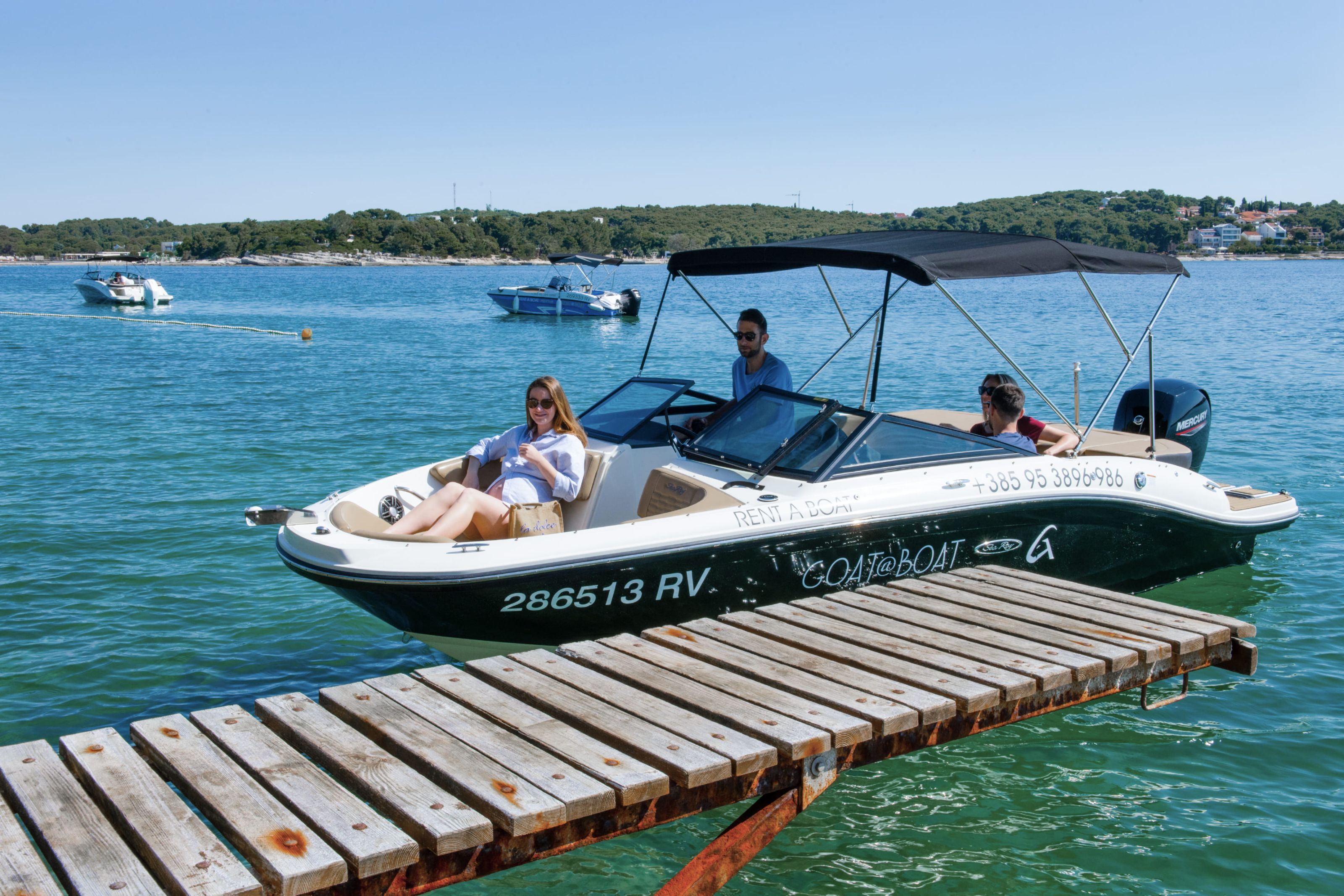
In practice, self-drive boat rental means bareboat rental: you rent the boat privately, without a skipper, and you are responsible for navigation, docking, anchoring, and safety decisions during the day. In Rovinj, that usually requires a valid sea or coastal license for almost all speedboats, with small no-license boats being the main exception. Check the full list of recognized licenses in Croatia.
For many first-time renters, the real challenge is not driving in open water. It is the practical side of the day: leaving the pier calmly, understanding where and how to anchor, reacting correctly near swimmers or shallow water, and returning the boat without stress. That is why the handover and the briefing matter so much. A self-drive day gives you the most freedom, but it also means you need to be comfortable with simple but real responsibilities. The boat itself matters, but for a first rental the quality of the explanation often matters just as much.
What a good handover and check-in should look like
This is one of the most important parts of the whole experience because first-time renters often underestimate it. A proper check-in should not be just “here are the keys, enjoy.” It should include the agreement, a short explanation of the boat, the basic safety rules, where the equipment is located, and a clear explanation of how docking and anchoring work.
A good operator should also show you the practical part, not only explain it. The best handovers in Rovinj go beyond a quick verbal briefing and include a real docking explanation, a demonstration, practice, and useful follow-up materials for later reference. That is exactly what first-time self-drive guests should want, because docking is where many beginners feel most nervous. If you want to see what a detailed bareboat handover can look like in practice, our FAQ gives a clear example of the kind of process and follow-up information that actually helps renters.
In real life, this is also one of the clearest signs of a serious bareboat operator. If the handover is rushed, if nobody checks whether you can actually dock, or if nobody shows you the location of fenders, lines, the anchor setup, fuel information, and safety basics, that is not a small detail. It directly affects how relaxed or stressed your day will feel once you are alone on the boat.
Where handover usually happens
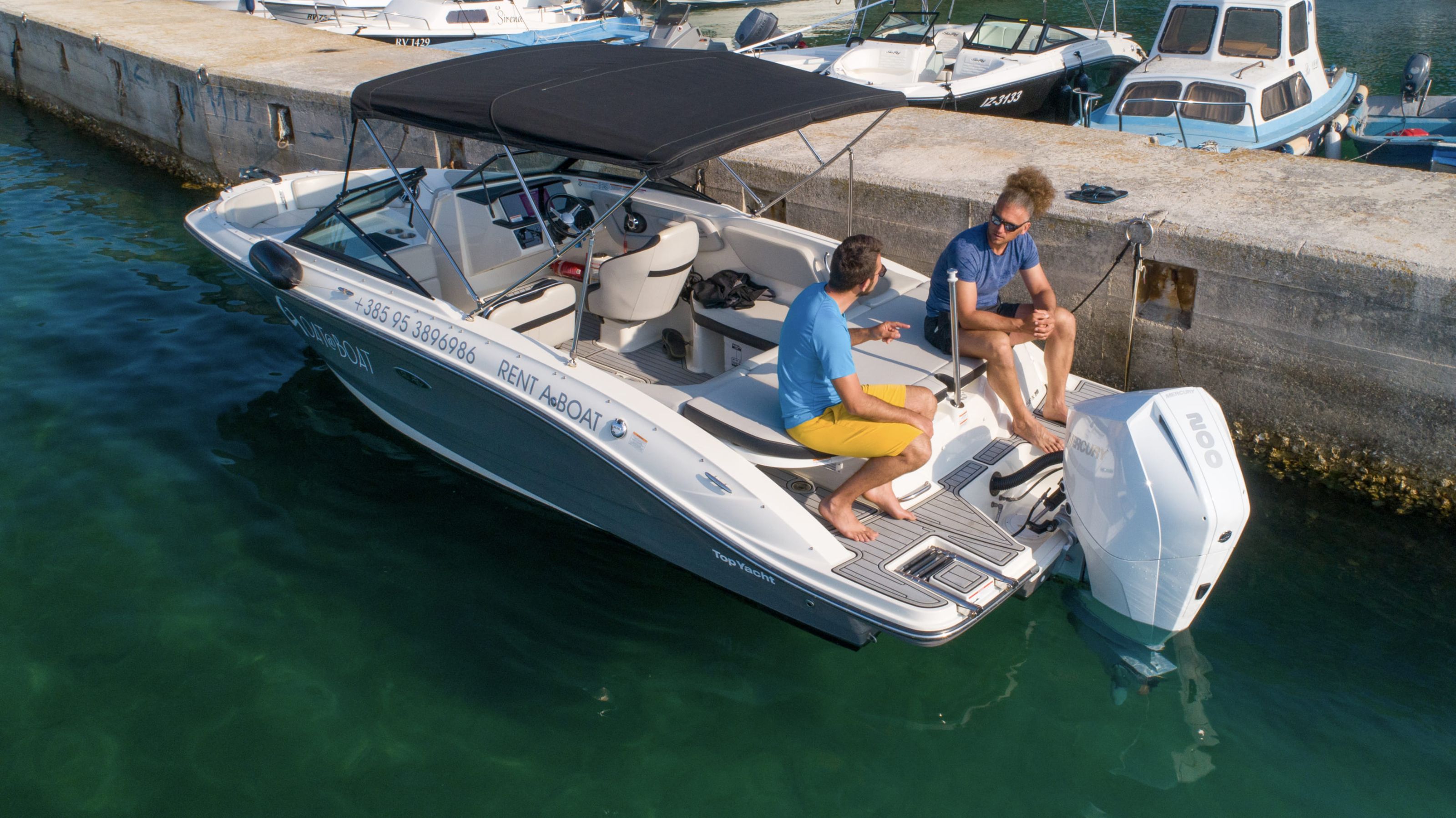
In practice, handover locations vary a lot depending on the operator, the boat, the season, and where you are staying. Common central meeting points include places like Mali mol or Dolphin dock station, while other operators may also use accommodation-side piers, resort docks, island ferry piers, campsite marinas, or one fixed base outside the centre.
That matters more than many guests expect. If your accommodation is in the old town, near Maistra hotels, in Valalta, on Red Island, or in one of the campsites, the difference between “you must come to one fixed marina” and “the boat can be brought closer to you” changes the whole day. It affects parking, timing, and how simple the start and end of the rental feel. The handover options listed on our FAQ are a good example of how much these meeting-point details can vary by area, season, and boat.
Before booking, it is worth checking three things:
- where the default handover point is
- whether another handover point is possible for your accommodation area
- whether that flexibility depends on season or boat type
This sounds minor, but it is one of the easiest ways to avoid unnecessary friction on the rental day.
What documents you should have with you
For self-drive rental, the basics are simple. You should have your valid skipper or boat license, an ID card or passport, and a mobile phone. A copy or a photo of the license may be accepted by some operators, but you should confirm that in advance instead of assuming.
It also helps to think beyond legal documents. Towels, swimwear, sunscreen, water, snorkeling gear, and a light extra layer outside peak summer are obvious but still worth preparing in advance. What matters most is that your “boat day bag” stays compact. Too much loose stuff makes a smaller speedboat feel cluttered very quickly.
Boat equipment that actually matters
Guests often ask about premium features like sound system, fridge, or shower, but first-time self-drive renters also ask about very basic things for a reason. They want to know whether the boat has a bimini or shade, a depth meter, a fuel display, GPS, a swim ladder, cupholders, or enough storage for a realistic day on the water. That is not overthinking. Those details affect comfort, confidence, and how easy the day feels.
A simple way to think about equipment is this: some things should be standard on almost every speedboat, while others are worth checking boat by boat.
Basic operating equipment you should expect on almost every speedboat:
- bimini / shade
- anchor
- mooring lines
- fenders
- kill switch
- ladder
- fuel display or fuel computer
If a boat is missing one of those things, that is usually an exception and a very rare case.
Navigation-support equipment worth checking in advance:
- GPS
- depth meter
- chart or recommended map
Comfort equipment that can vary a lot from boat to boat:
- cooler or fridge
- shower
- sound system
- cupholders
If you are renting for the first time, the most important equipment is not always the most glamorous. GPS is useful, but a depth meter is especially high on the list because many guests feel much less confident without it, especially when approaching shallower areas or choosing where to anchor. It also helps to know in advance what is standard and what is boat-specific, because comfort features can vary a lot from one model to another. If you are still deciding what kind of boat makes the most sense for your group, route, and comfort level, our guide on choosing the right boat goes deeper into that part of the decision.
How fuel is usually handled
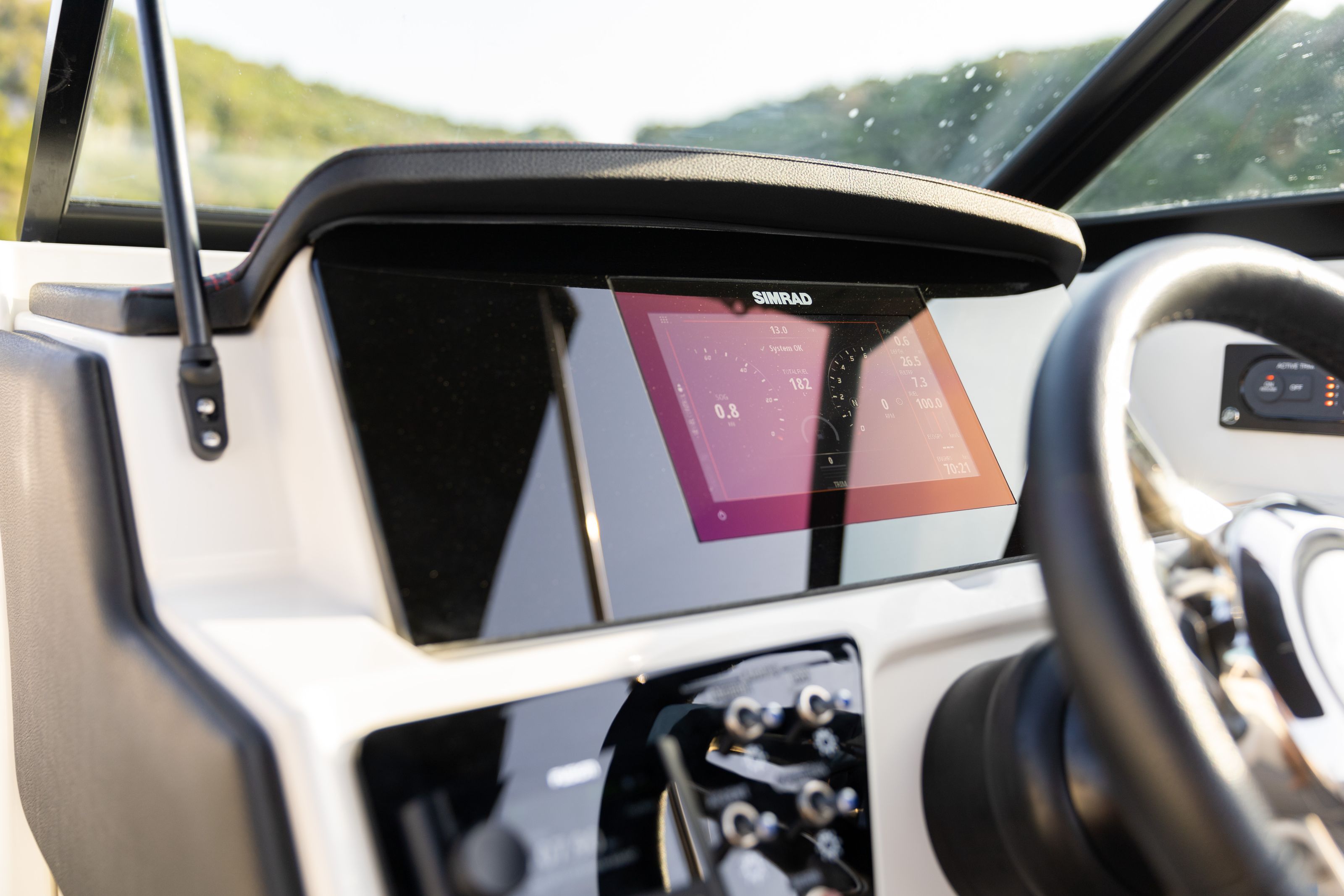
Fuel is one of the topics first-time renters worry about most, mainly because they want to know the final cost in advance. In practice, fuel is often not included in self-drive rental, except for small no-license boats. One of the easiest systems for renters is when fuel is charged after the rental based on actual consumption, because that removes the need to stop at a fuel station and makes the day simpler. On our boats, for example, each boat page shows the average fuel consumption, which helps guests get a more realistic idea before booking.
That setup saves guests the stress of finding a fuel station and reduces the risk of damage or using the wrong tank. But you still need to understand that fuel use is not a fixed number. It depends on speed, driving style, sea conditions, route, and how many people are on board. That is why a good operator should explain the system clearly before departure instead of just saying “fuel is extra.”
Insurance and security deposit
This is one of the practical things first-time renters should understand clearly before booking. There are a few different ways operators handle damage liability. A physical security deposit still exists in some cases, and a card-held deposit also exists, but both are now relatively rare. Much more often, the liability is defined in the rental agreement instead.
That difference matters because it changes what happens on the rental day and how clearly responsibility is explained. On our side, for example, we do not charge a security deposit. Instead, the agreement defines the maximum amount that can be charged in case of damage, depending on the boat, and that is charged only if the damage happened because of the renter’s own mistake. Our smallest boat Roto has no damage fee at all. That keeps the process simpler on the rental day while still making the liability rules clear.
If your operator works without a physical deposit, that does not mean “no responsibility.” It simply means the rules are handled through the agreement instead of cash or a card hold. In that case, it is smart to ask the operator to show you the existing damage before departure, and it is especially worth checking the propeller because that is one of the most common damage points. For the broader basics around fuel, insurance, cancellation, routes, and general rental logic, our complete boat rental guide is the best supporting article to read before booking.
Docking, anchoring, and safety basics
Most first-time anxiety in bareboat rental has very little to do with open-water driving. It usually comes from docking, anchoring, and the fear of making a silly mistake close to the pier. That is why the handover matters so much.
The most useful basics to understand before departure are these:
- keep well clear of the coast and never treat the near-shore zone casually
- for small rental speedboats, the general rule is to stay at least 50 meters off the coast
- within 300 meters of the coast, in narrow passages, and on approaches to harbors or anchorages, keep your speed down and do not exceed 8 knots
- driving on plane is only allowed beyond 300 meters from the coast
- stay at least 100 meters off diving marks
- use minimum throttle in harbors and while docking
- if you are unsure what to do near the pier, slow everything down and go back to neutral before doing anything else
That is the kind of information that should be explained clearly before departure, because most first-time mistakes happen near the shore, near the pier, or while anchoring — not while cruising comfortably in open water.
Anchoring basics are just as important:
- choose a calm spot protected from wind and waves
- 4–6 meters is usually the best anchoring depth
- release enough line after the anchor touches bottom
- do not reverse while the anchor is in the water
- do not pull the anchor line by hand to test it
- if the boat keeps drifting, the usual problem is not enough line, not “bad luck”
That topic can go much deeper than this article needs to. If you want the broader practical basics around routes, fuel, docking, and anchoring in one place, our complete boat rental guide is the better long-form article to continue with.
None of this is complicated once somebody shows it to you properly. The mistake is assuming it is obvious without explanation. First-time renters do much better when they get a real check-in, not just a fast handover.
Common mistakes first-time renters make
The most common mistakes are usually not dramatic ones. They are small wrong assumptions:
- assuming every boat has the same equipment
- focusing only on the rental price and ignoring fuel logic
- overestimating how easy docking will feel without practice
- bringing too much stuff on board
- choosing a boat by maximum legal capacity instead of realistic comfort
- thinking self-drive will automatically feel simple without a proper briefing
- not checking in advance whether the boat has the navigation or comfort equipment they actually care about
Most of these problems are avoidable when the booking process is clear, the handover is taken seriously, and the renter knows in advance what kind of day they are actually planning.
FAQ
Is self-drive boat rental in Rovinj beginner-friendly?
Yes, but only if you already have the right sea license and the operator gives you a proper handover. The boat itself is only part of the experience. The quality of the check-in matters just as much.
What should a good check-in include?
At minimum: the agreement, safety rules, equipment location, docking explanation, and ideally a docking demonstration or practice.
Is fuel usually included?
Usually no, except for small no-license boats. In many self-drive rentals, fuel is charged separately based on consumption.
What equipment should I ask about before booking?
For a first self-drive day, the most useful questions are usually about GPS, depth meter, and the comfort features that matter to your group, such as fridge, shower, or sound system.
Do I need to bring the original license?
Not always, but you should confirm that with the operator in advance instead of assuming.
Compare boats and prices
To compare which boats, categories, and setups are available, start with Our boats. If price is one of your main filters, check the Pricelist. And for the practical details before booking, the easiest place to start is the FAQ.